ServicesRain Chains
Rain Chains in Edisto Beach
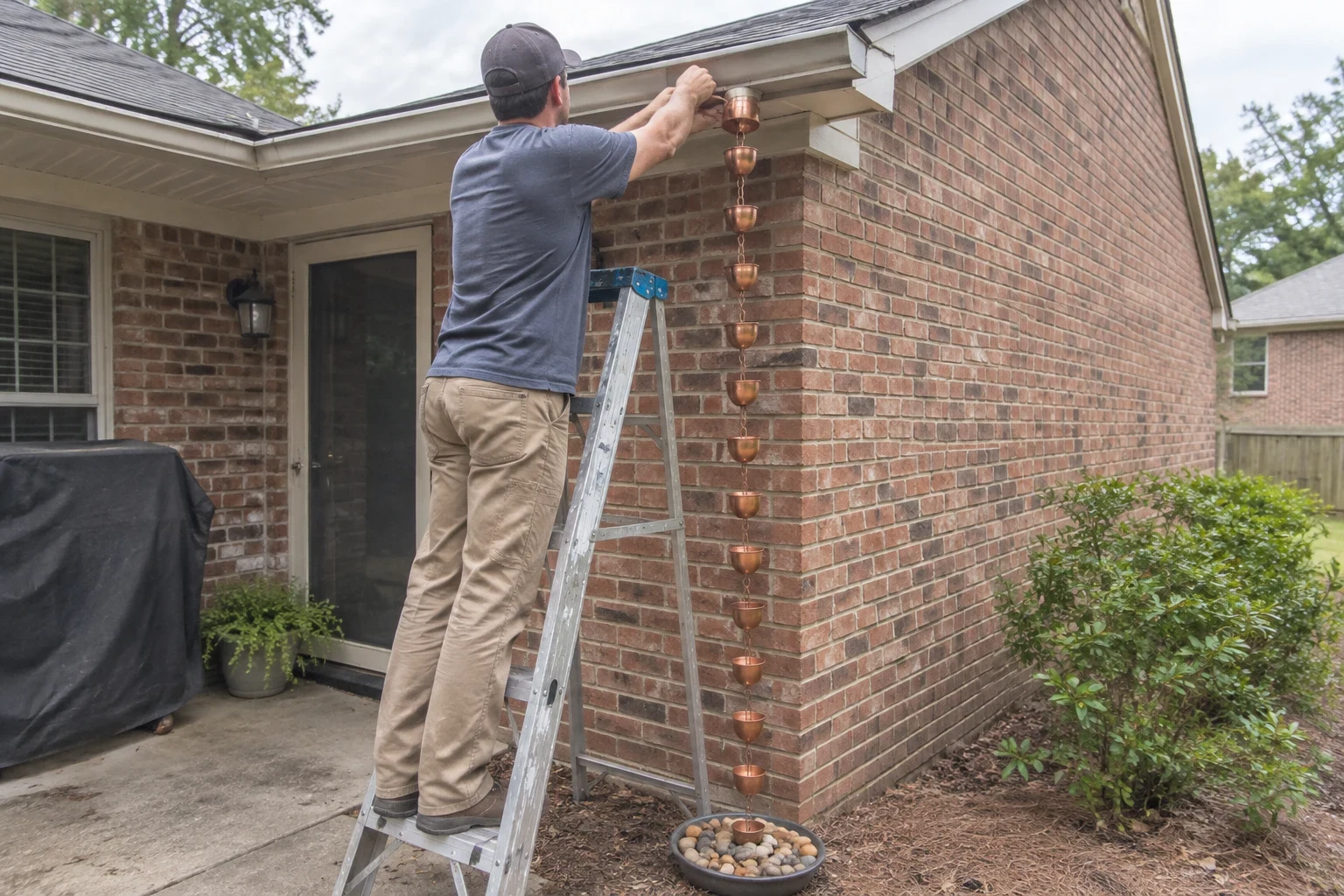
We hang rain chains that carry water. That means the right cup style for your roof's runoff, a properly sized gutter outlet, and an anchor and basin at the bottom so splash stays off your siding. We cover plantings while we work and leave the ground raked clean.
How a rain chain carries water, and where one belongs
Picture a string of open cups or links hanging from the outlet in your gutter. Water clings to the metal as it falls, so instead of spilling off a corner in a sheet, it travels down the chain in a steady, guided stream. That makes chains a natural choice beside entries, porches and decks, where you can watch the rain come down, and on gutter runs that collect from a smaller part of the roof.
Some corners are a poor match. When a long gutter run drains a large, steep roof, a heavy summer thunderstorm can send down more water than a chain can carry, and the extra ends up on your steps. So before suggesting a chain, we work out how much roof area feeds each outlet. When a corner is better left alone, you will hear that from us directly.
Over our 8 years in business, coastal wind and salt air have taught us how to hang a chain that lasts: which metal to choose, how to anchor it and where to send the water once it reaches the ground.
What our rain chain work includes
Outlet sizing and the gutter adapter
The chain hangs from a gutter outlet, and that opening has to be large enough to feed it. We fit a gutter adapter or V-bar hanger so the top link sits centered in the stream and does not rub against the gutter edge.
Cup or link style chosen by flow
Cup chains catch water in a series of open-bottom cups, so they handle more volume with less splash. Link chains look lighter but throw more spray. We match the style to the runoff at that corner.
Metal that holds up in salt air
Copper weathers to brown and then a green patina, and it does not rust. Aluminum costs less and also resists corrosion. We point out where uncoated steel tends to streak siding with rust.
An anchor at the bottom
A loose chain swings in a gust and slaps the house. We tension it to a ground stake or basin anchor so it hangs plumb.
A basin or gravel bed
The water needs a landing spot where it can soak in or move away. We set a catch basin, stone bed or splash pad, graded so water drains away from your foundation instead of pooling against it.
Protection and daily cleanup
Drop cloths go over beds and walkways before we drill or cut. We pick up metal shavings, sealant tubes and packaging at the end of each day, and we rake the soil back level around the basin.
Clues that a corner of your home suits a rain chain
A porch drain that clogs or rattles
Closed drains next to a porch tend to fill with leaves, clatter in the wind or leak where their joints meet. A chain is open from top to bottom, so nothing hidden can block it and it stays easier to keep running.
A rut worn into the ground below a corner
Water spilling straight over the gutter edge cuts a groove in the soil and splashes mud up onto the siding. Hanging a chain over a basin gives that runoff a single, controlled place to land.
A chain you already have that sways or sprays
Without an anchor, or with a link style on a corner that sees heavy flow, a chain flings water at doors and windows. Rehanging it with cups and setting proper tension usually solves it.
Rust streaks under the hardware
Orange stains running down the wall beneath a chain tell you the chain or its hanger is breaking down. We swap in copper or aluminum parts that hold up in damp, salty air.
How a rain chain job runs
- 1
Check the roof, gutter and ground
On the estimate visit we check which roof planes drain to that corner, the gutter's slope and condition, and the soil below. If the gutter is sagging or leaking at its seams, we say so, because it may need gutter repair before a chain goes on.
- 2
Choose the chain, length and landing
We measure from gutter to grade, choose a cup or link style and the metal, and decide on a basin or stone bed. You get the plan and the price in writing before any work starts.
- 3
Protect, open the outlet and hang
We lay drop cloths, cut or enlarge the outlet, seal its edges and set the adapter. The chain goes up and is tensioned to its anchor so it hangs straight.
- 4
Set the basin, test and clean up
We level the basin or stone bed, then run a hose into the gutter and watch the water track down the chain. After that we sweep, rake and walk you through what we did.
What affects the price of a rain chain
Most of the cost sits in two places: the chain itself and the work at its top and bottom. Our estimate is written line by line, so you can see what each part adds and choose where to spend.
- Metal and style
- Solid copper cup chains cost more than aluminum or coated link chains. Heavier cups also carry more water, which can matter more than looks on a busy corner.
- Length of the drop
- Price follows length. A one-story porch takes a short chain, while a raised home or second-story eave needs a much longer one and a sturdier hanger.
- Outlet and gutter condition
- Fitting a chain to an existing outlet goes quickly. Cutting a new outlet, enlarging one or securing a loose gutter section first adds time.
- What goes at the bottom
- A splash pad is simple. A buried basin or a graded stone bed that moves water away from the foundation takes more digging and material.
- How many chains
- Several chains hung on one visit share setup and cleanup time, which lowers the cost of each.
Common questions about rain chains
Something not covered here? (843) 883-4411
Can a rain chain keep up with a summer downpour?
In ordinary rain and most hard storms, a cup chain carries the water down cleanly. During the worst bursts some of it will spill past the cups, and that is the reason we always put a basin or stone bed underneath. When a corner collects from too much roof, we recommend leaving the existing drain in place there and hanging the chain somewhere it can handle the flow.
Will the chain swing and hit the house in wind?
A chain left hanging free will. Ours are pulled taut to a ground stake or basin anchor so they stay plumb through normal gusts. When a tropical storm is on the way, you can unhook the bottom and lay the chain flat, and we show you how before we leave.
What metal holds up best so close to the ocean?
Copper lasts longest in salty air. It never rusts, and over the years it turns brown and then a green patina. Aluminum weighs less, costs less and resists corrosion too. Uncoated steel is the one we advise against on the coast, since it rusts and stains siding.
Will gutter guards get in the way of a rain chain?
No, the two work well together. Gutter guards or gutter covers keep leaves out of the trough, which helps keep the outlet above the chain open. When we hang the chain, we check that the guard's edge is not lying over that outlet and cutting off the flow.
What if a hanger works loose after you finish?
We stand behind the work with a 2-year workmanship warranty. If a hanger we installed loosens or an outlet seal we made begins to leak during those two years, we come back and correct it.
Get a rain chain planned for your entry
Tell us which corner you have in mind, and we will look at the roof, the outlet and the ground below it. We received the Angie's List Super Service Award in 2018, and we still sweep and rake every site before we leave.